Common Watering Mistakes and How to Avoid Them
Learn the signs of overwatering and underwatering to keep your plants healthy.
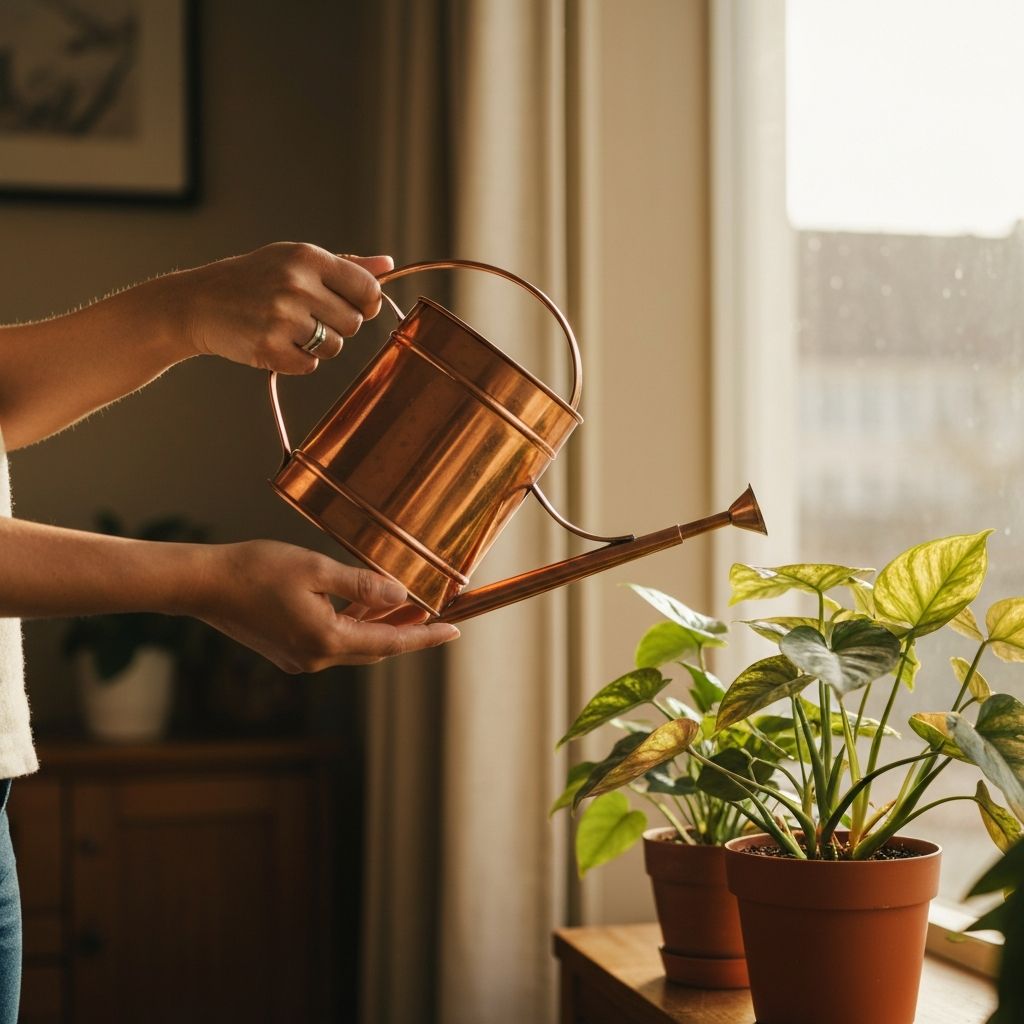
Watering seems simple, but it's actually the most common cause of houseplant problems. Learning to read your plants and understand their needs will transform your success rate.
Signs of Overwatering
Yellow leaves, mushy stems, fungus gnats, and a musty smell are all signs of overwatering. Root rot can develop quickly in waterlogged soil, so if you notice these symptoms, reduce watering immediately and check the roots.
Signs of Underwatering
Crispy brown leaf edges, drooping leaves that perk up after watering, and soil pulling away from the pot edges indicate underwatering. While most plants recover quickly from underwatering, chronic drought stress can weaken them over time.
The Right Way to Water
Water thoroughly until it flows from the drainage holes, then allow the pot to drain completely. This ensures the entire root ball is hydrated. Avoid leaving plants sitting in water, as this can lead to root rot.
Quick Tips
- 1Use the finger test: stick your finger 2 inches into soil to check moisture
- 2Water less in winter when plant growth slows
- 3Use room temperature water to avoid shocking roots
- 4Water in the morning to prevent fungal issues

Written by Emma Chen
Founder & Plant Enthusiast